


FAQ
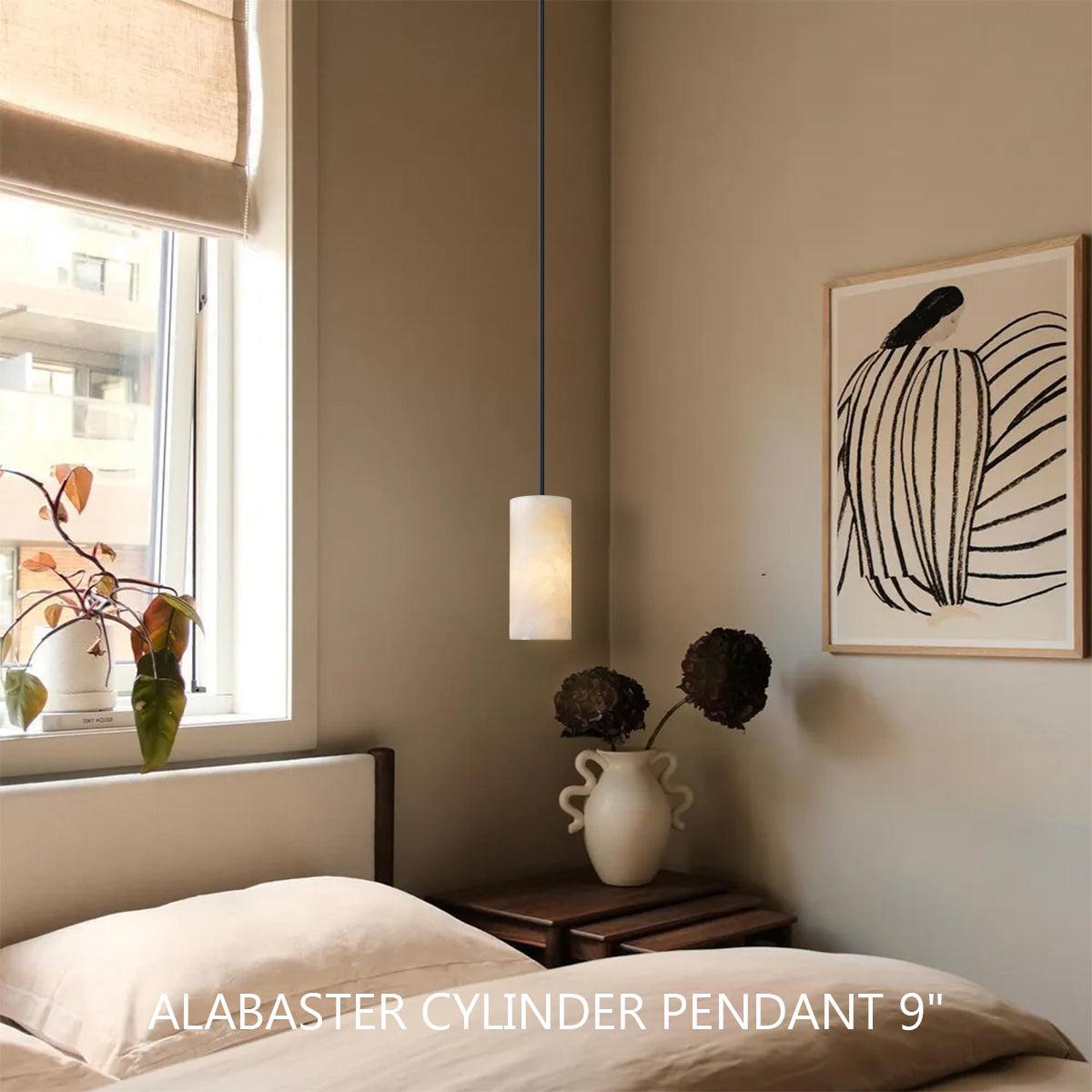
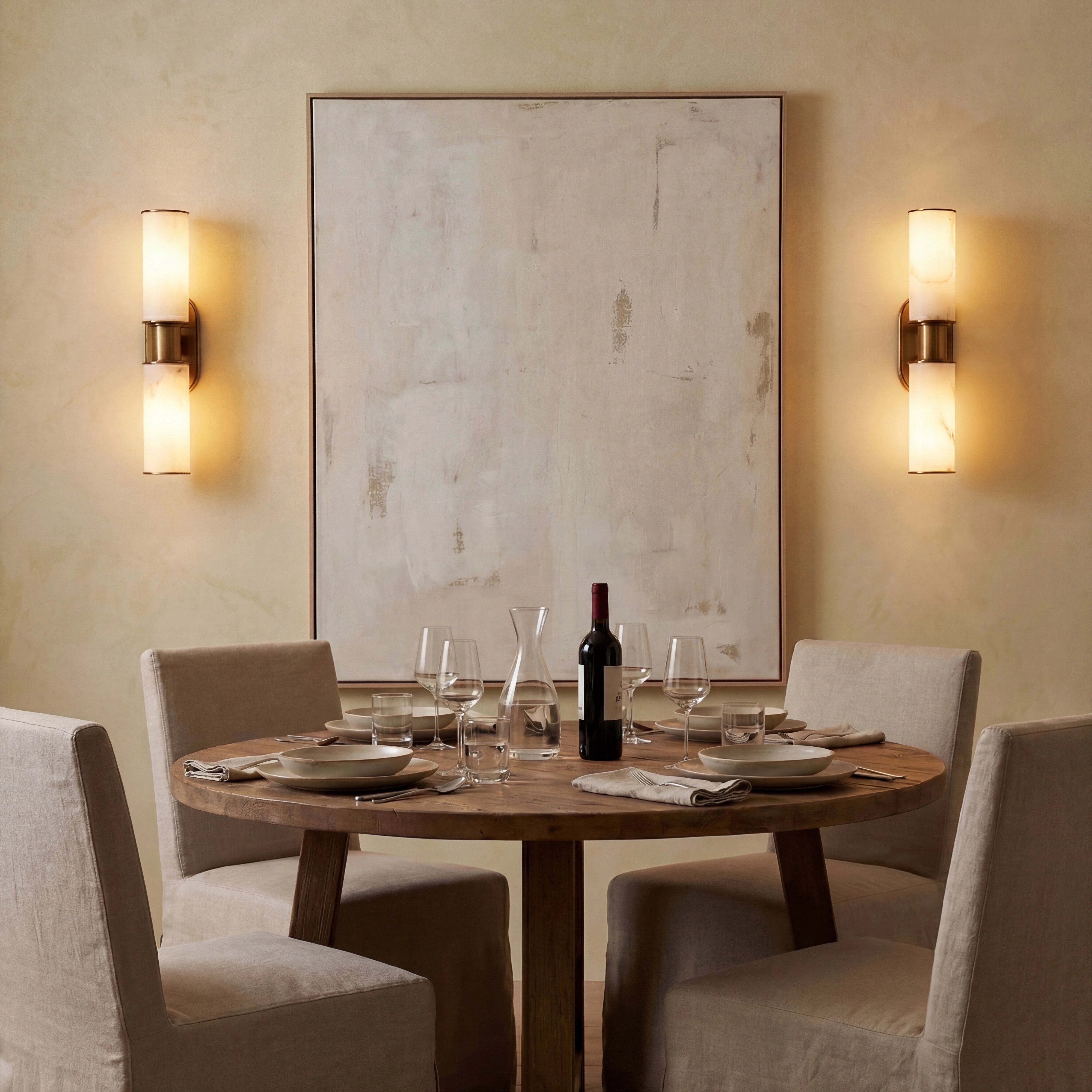
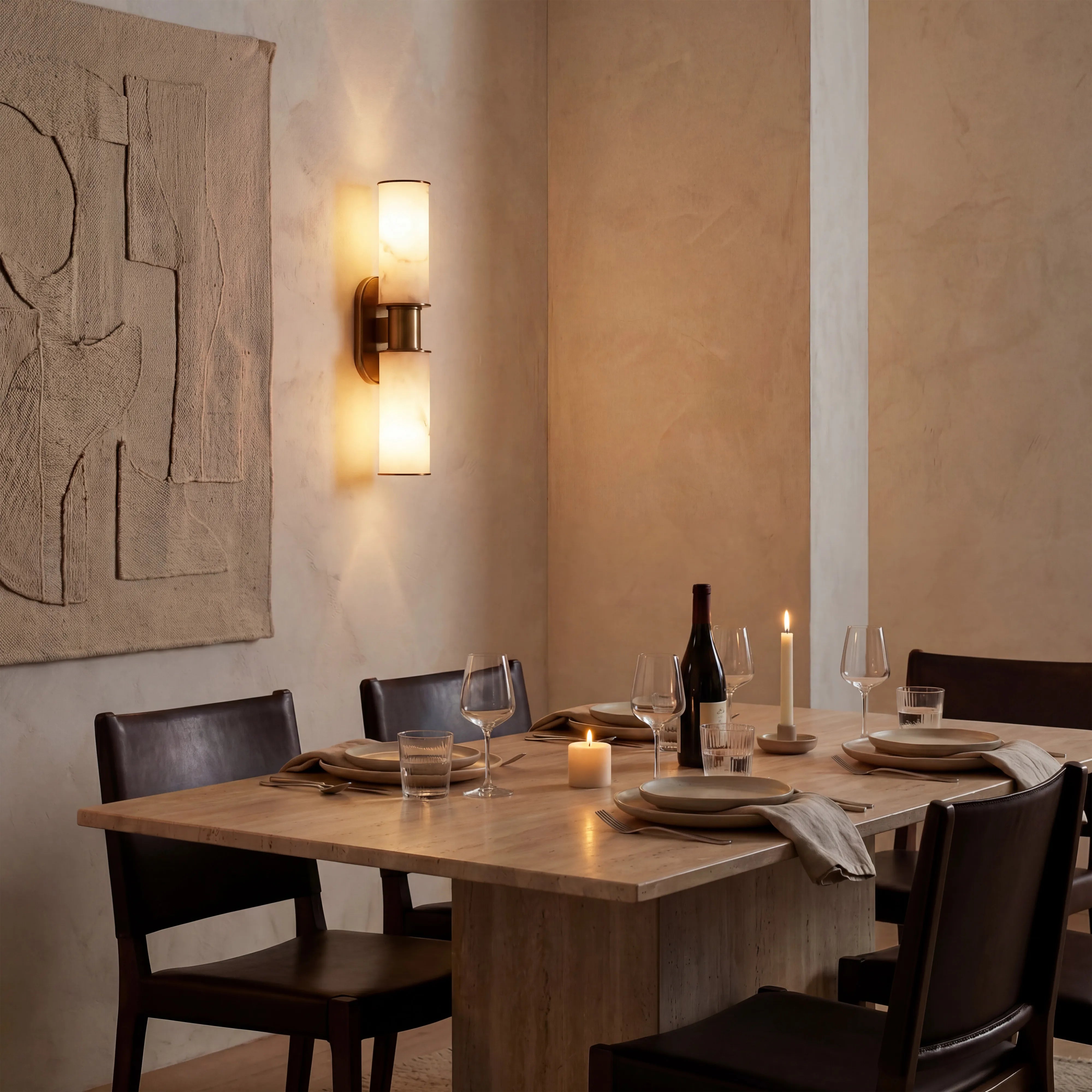
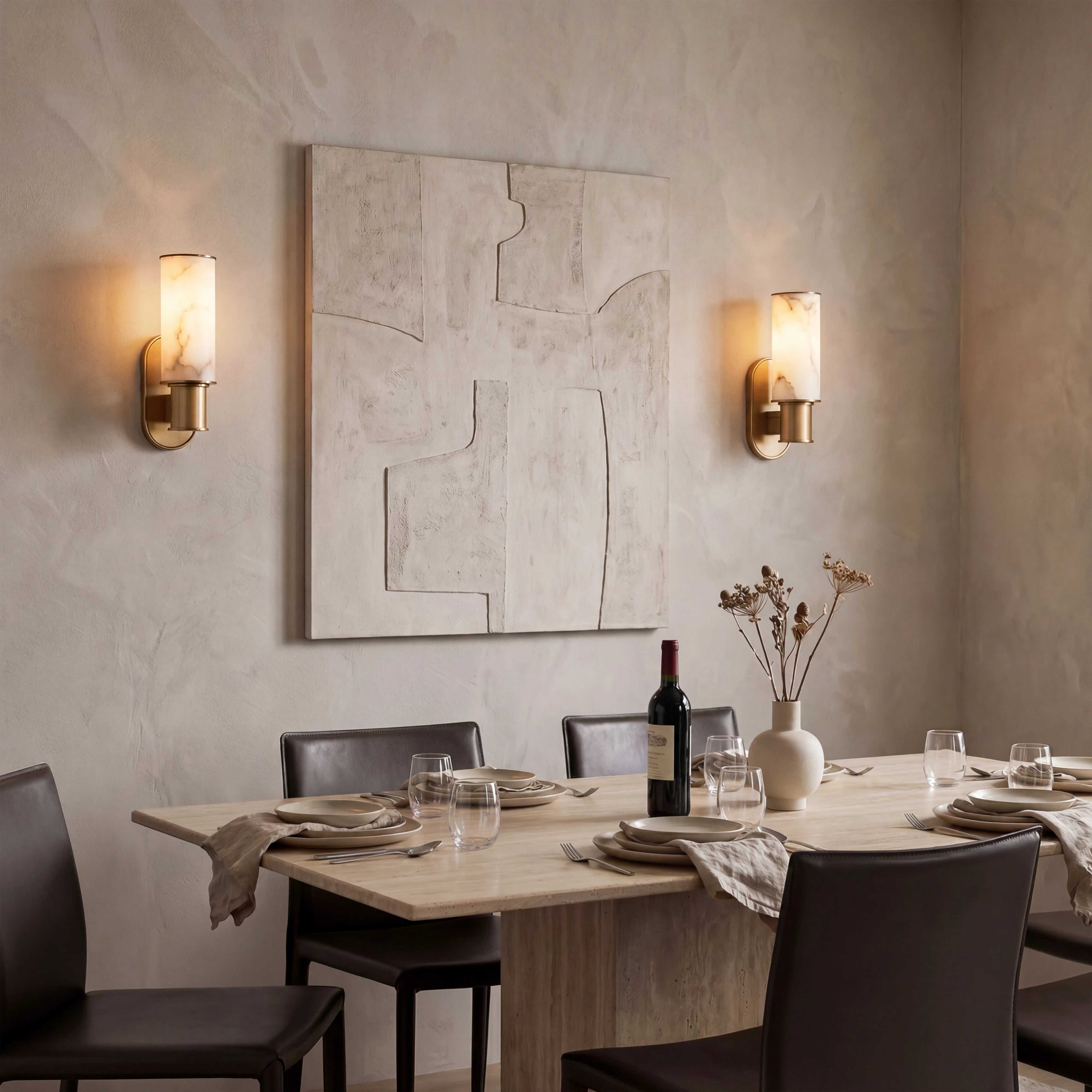
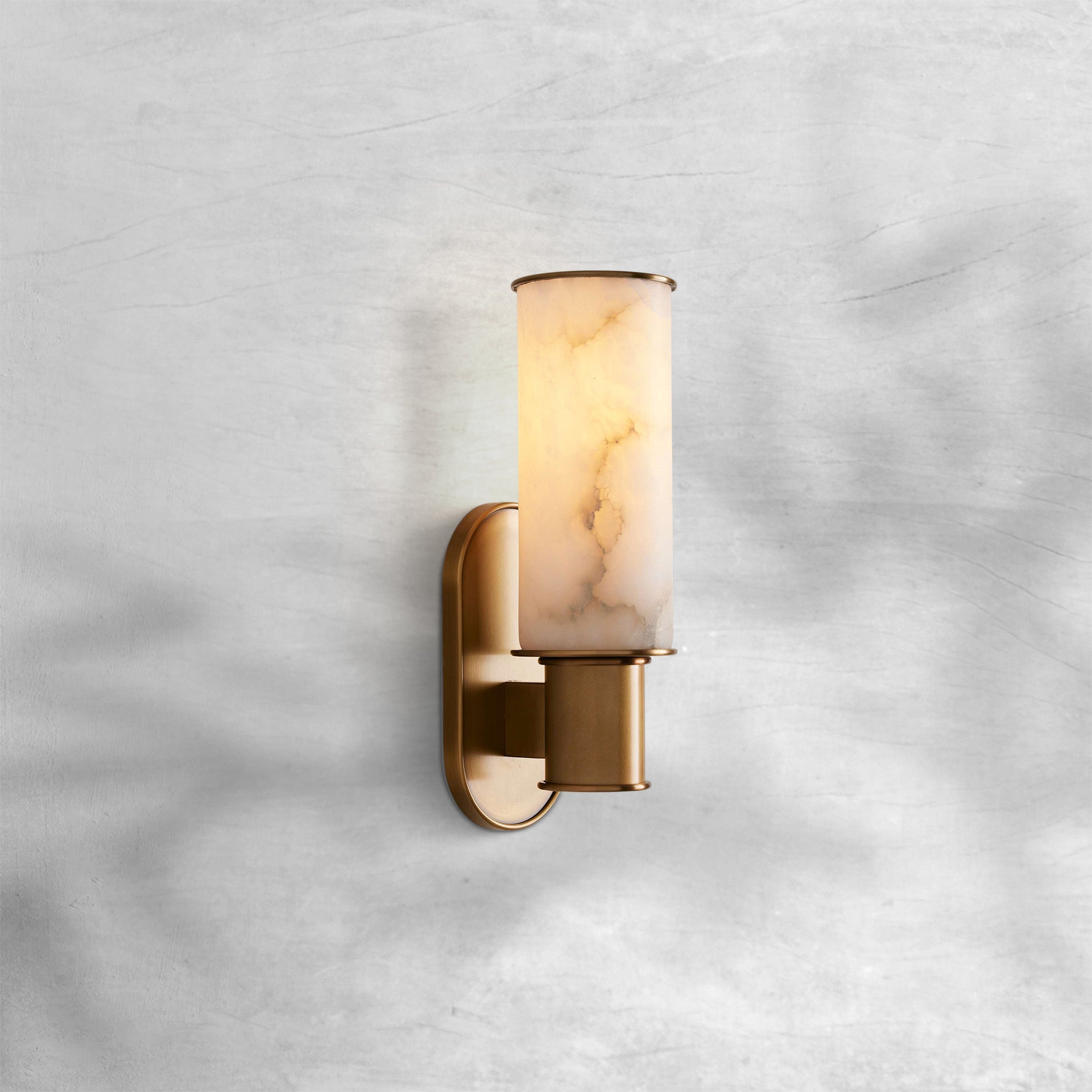
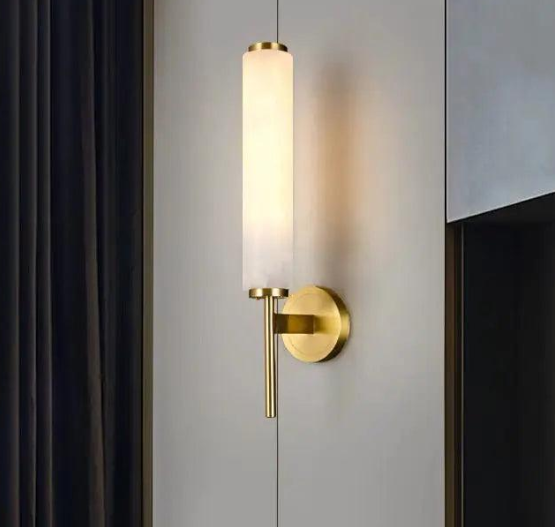
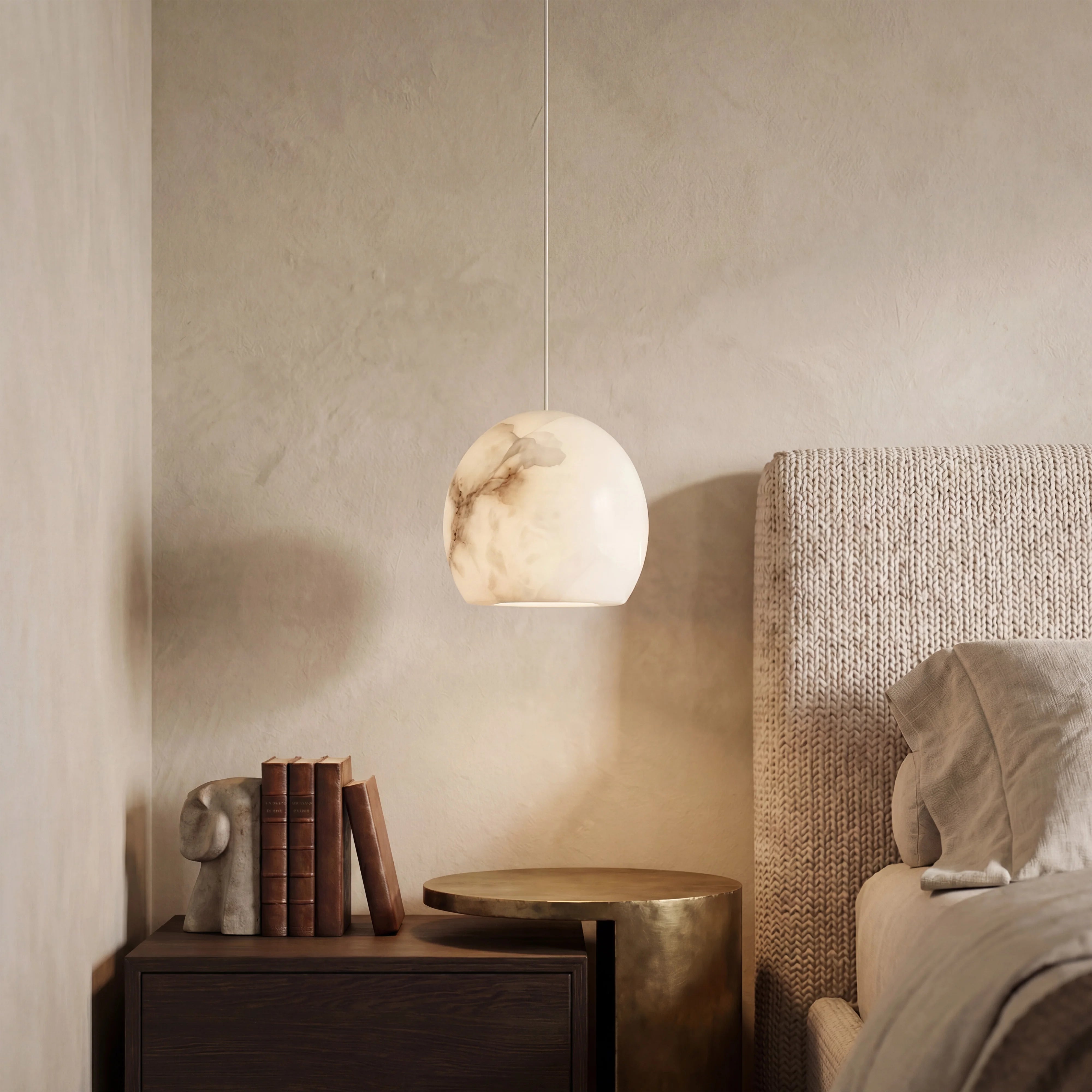
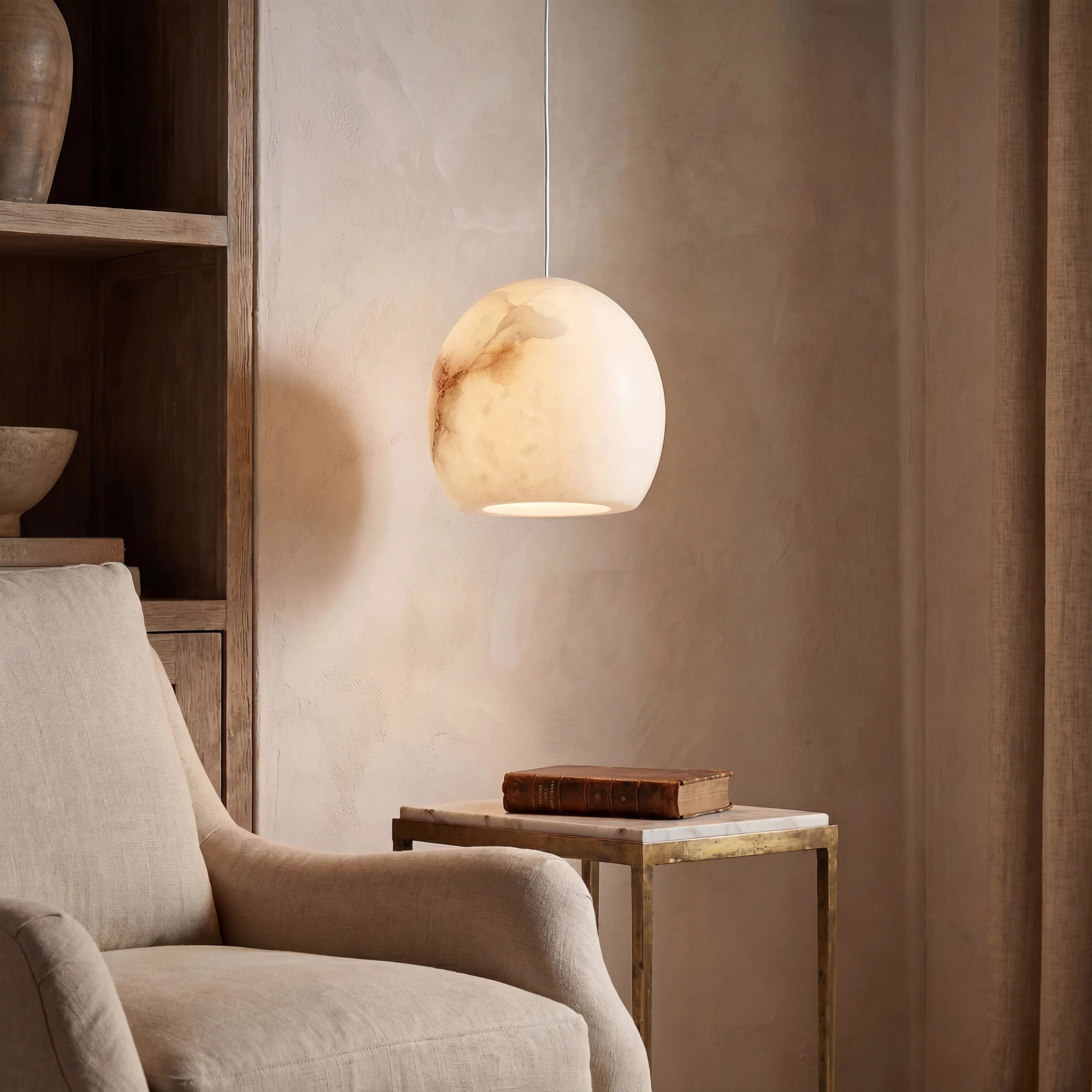
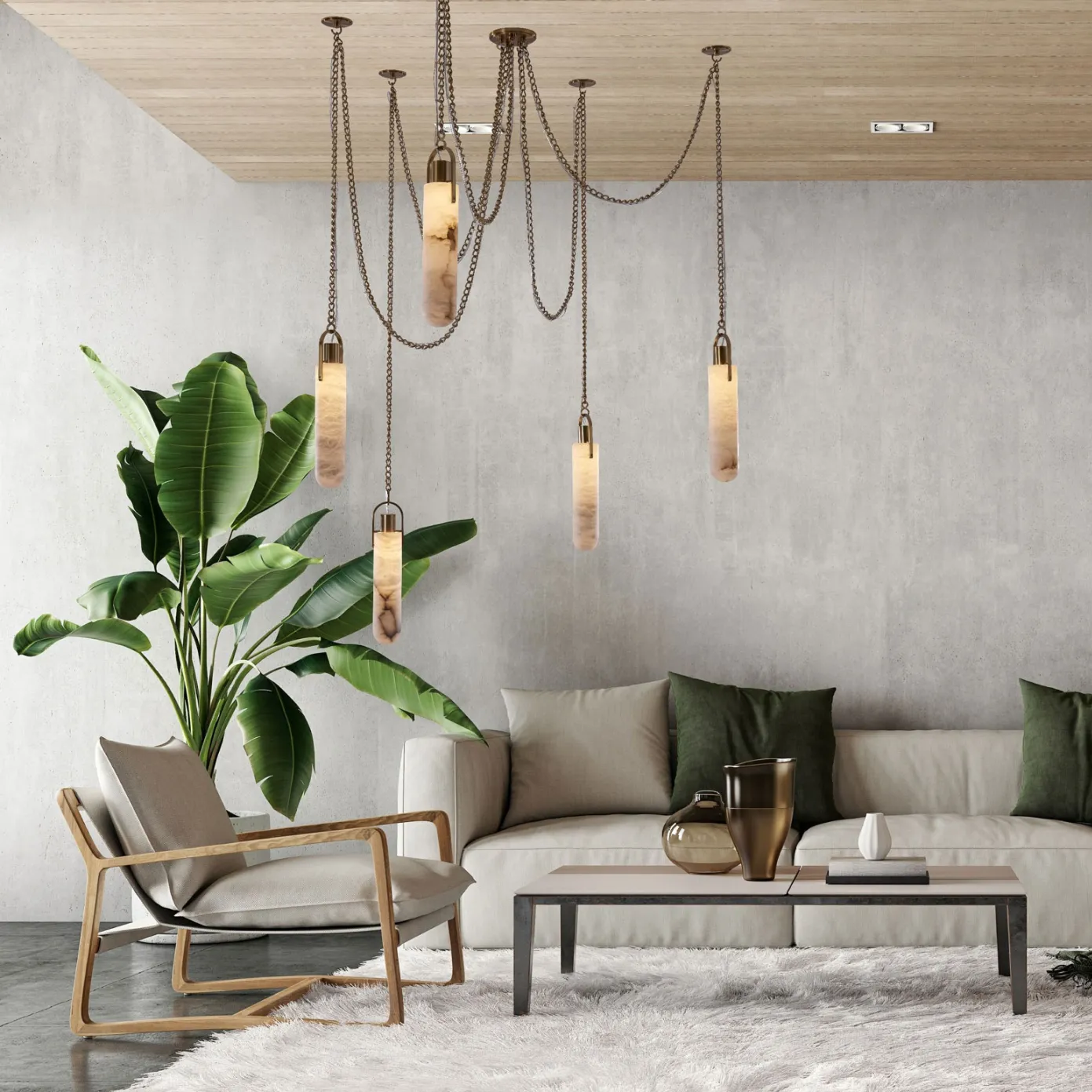
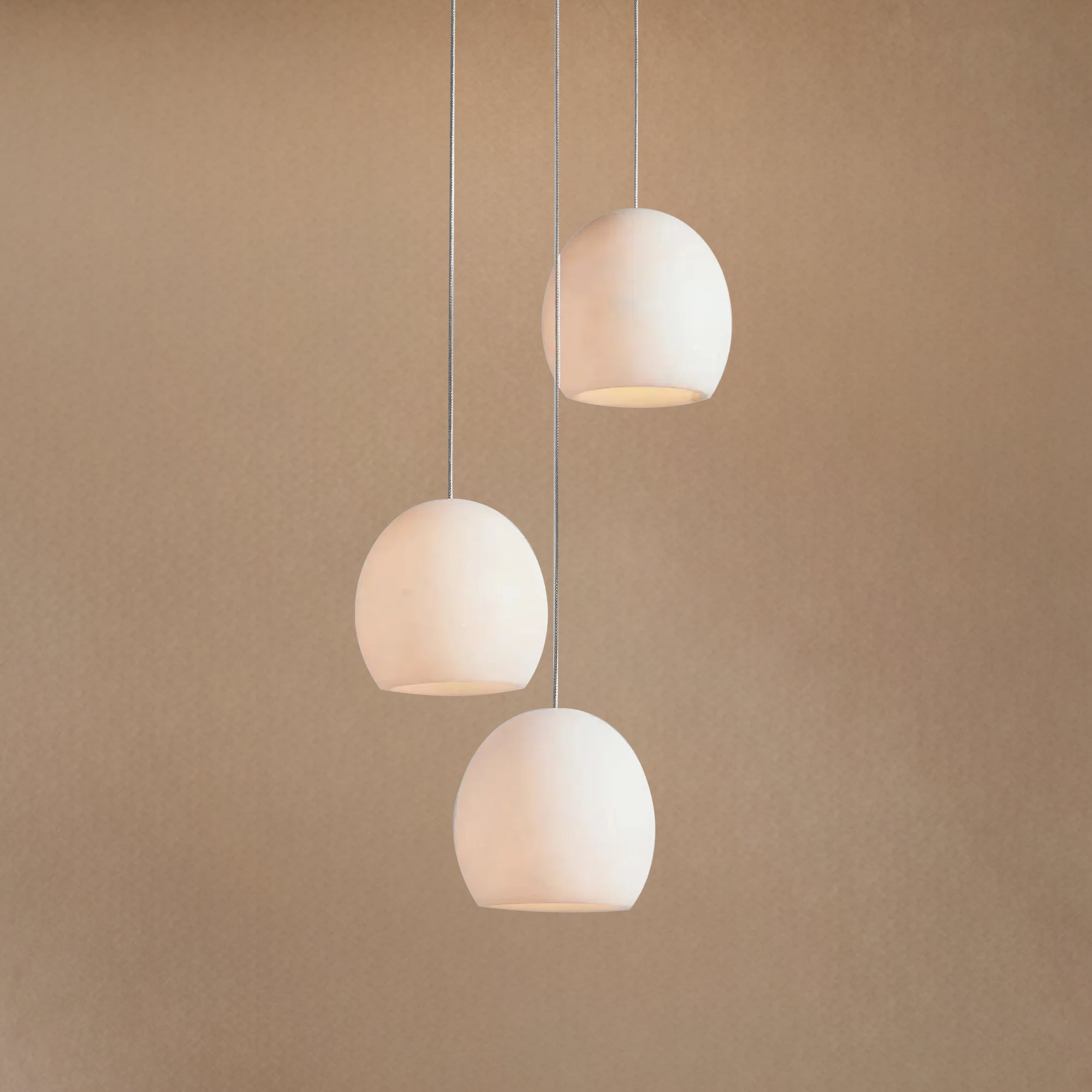
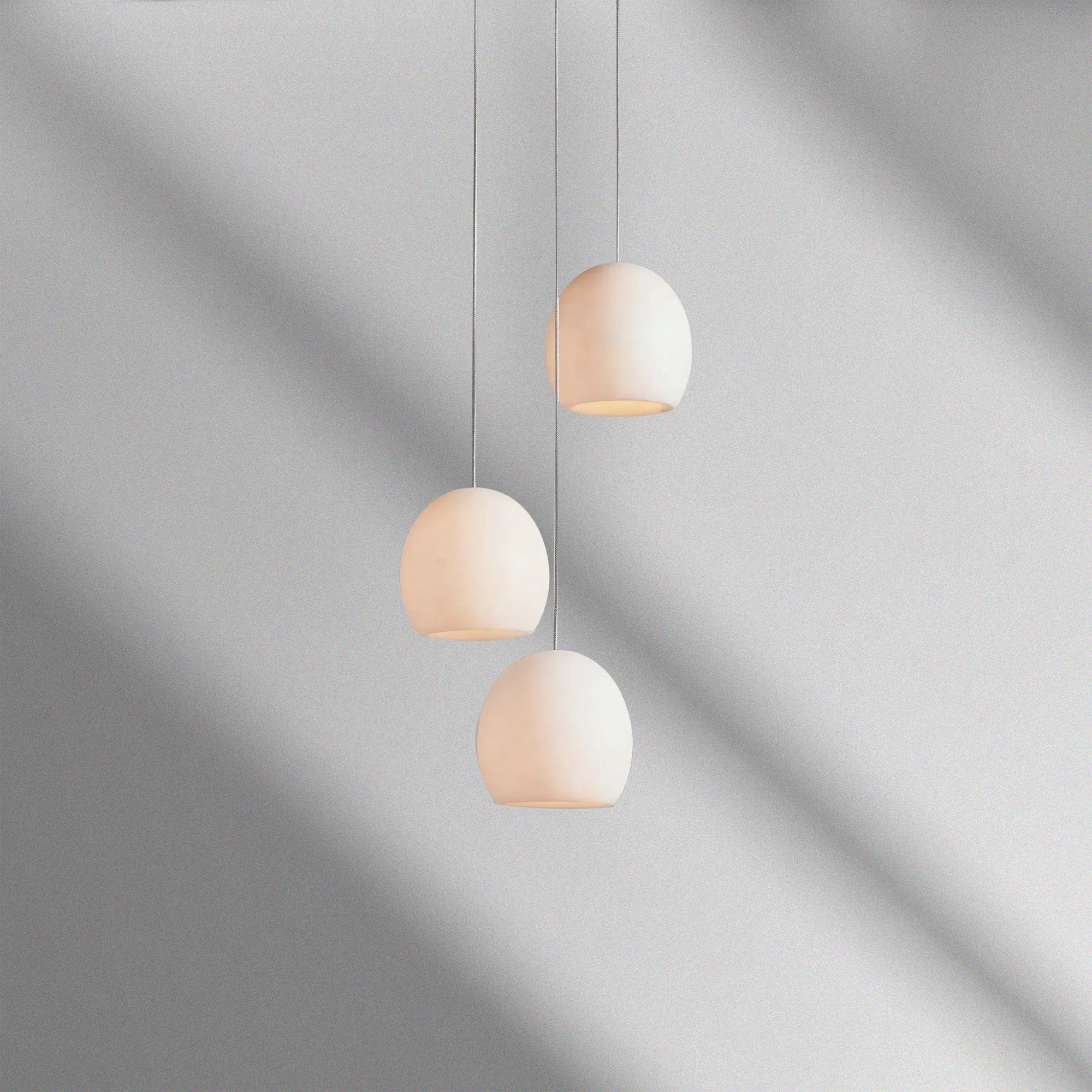
Genuine alabaster lighting uses hand-cut natural stone, so no two pieces share the same veining. Resin or acrylic "alabaster-look" fixtures exist and cost less, but they lack the depth, weight, and warm translucency of real stone. Check the product spec for "genuine" or "natural alabaster."
Dust alabaster with a dry, soft cloth. For marks, use a barely-damp cloth and dry immediately—alabaster is porous and water-sensitive, so never use soap, glass cleaner, or abrasive products. Turn the fixture off and let it cool before cleaning.
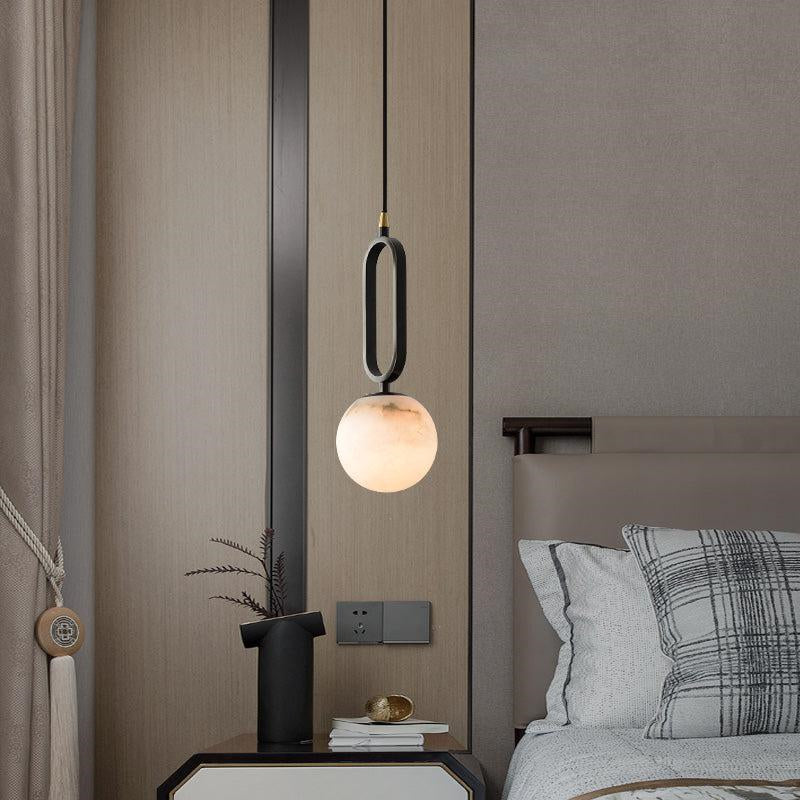
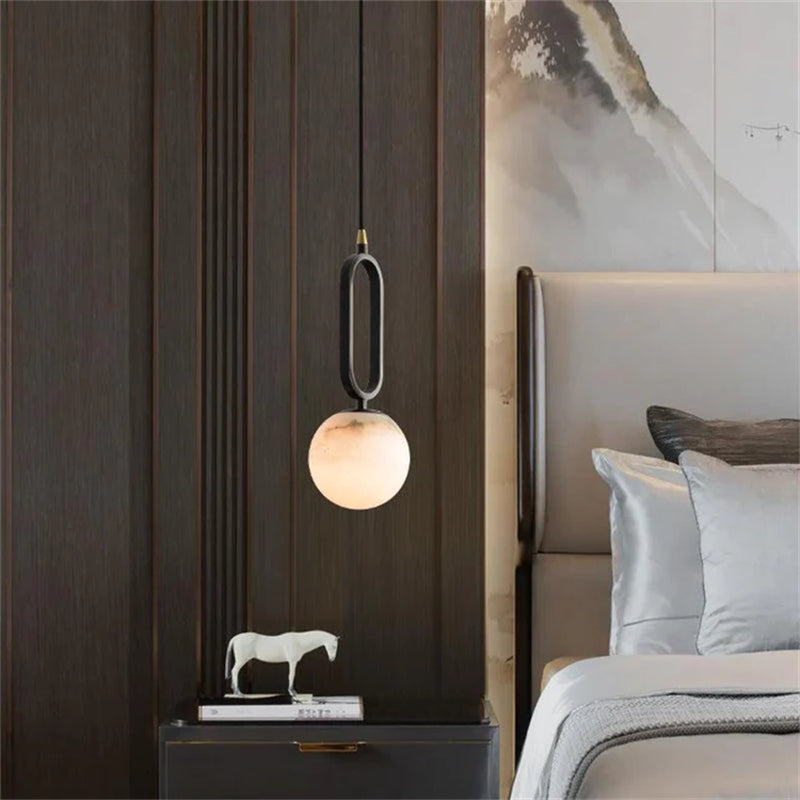
Alabaster diffuses light into a soft, ambient glow rather than bright task lighting. For a well-lit room, pair your alabaster chandelier with recessed or accent lighting, and use higher-lumen bulbs on a dimmer to control brightness without losing the signature warm effect.
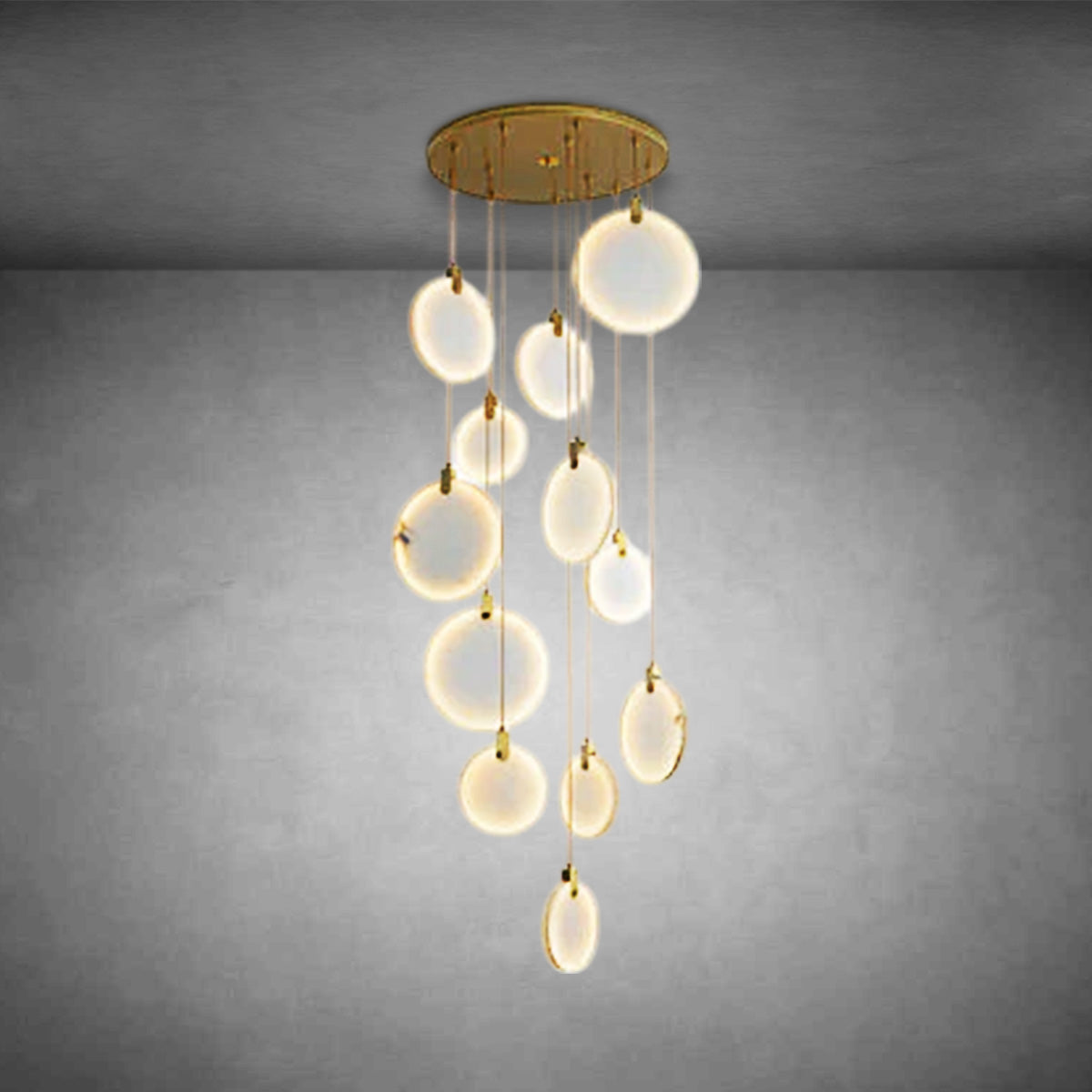
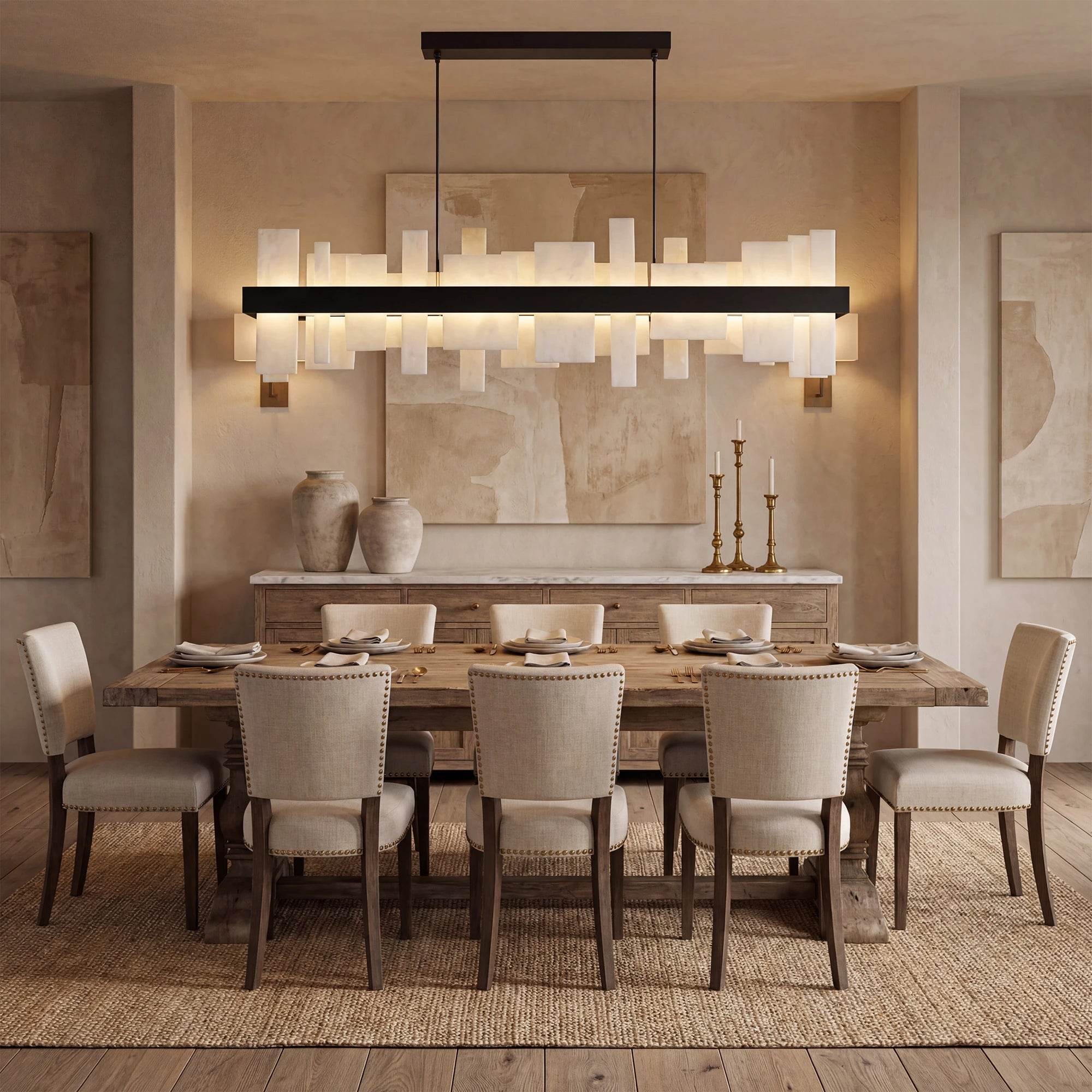
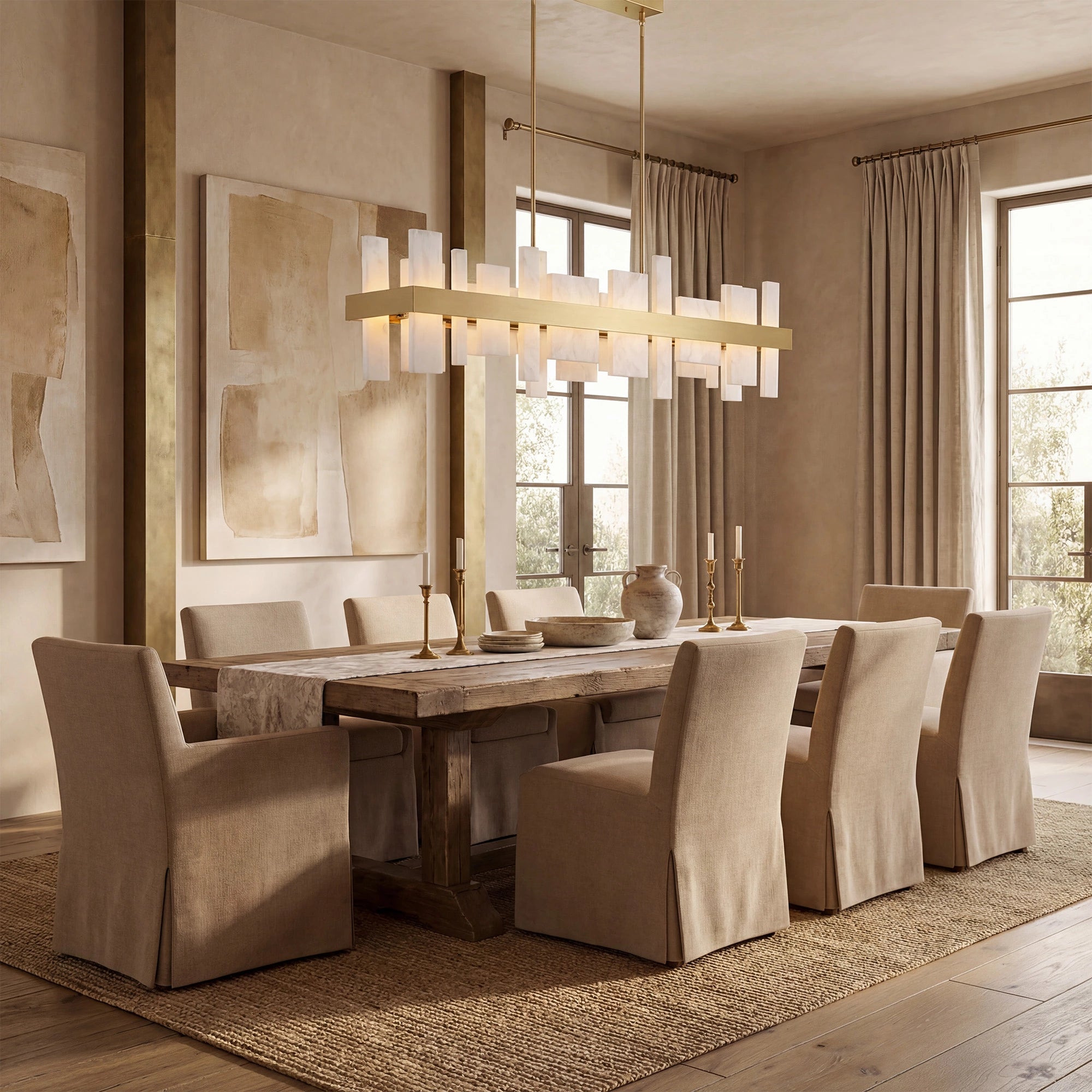
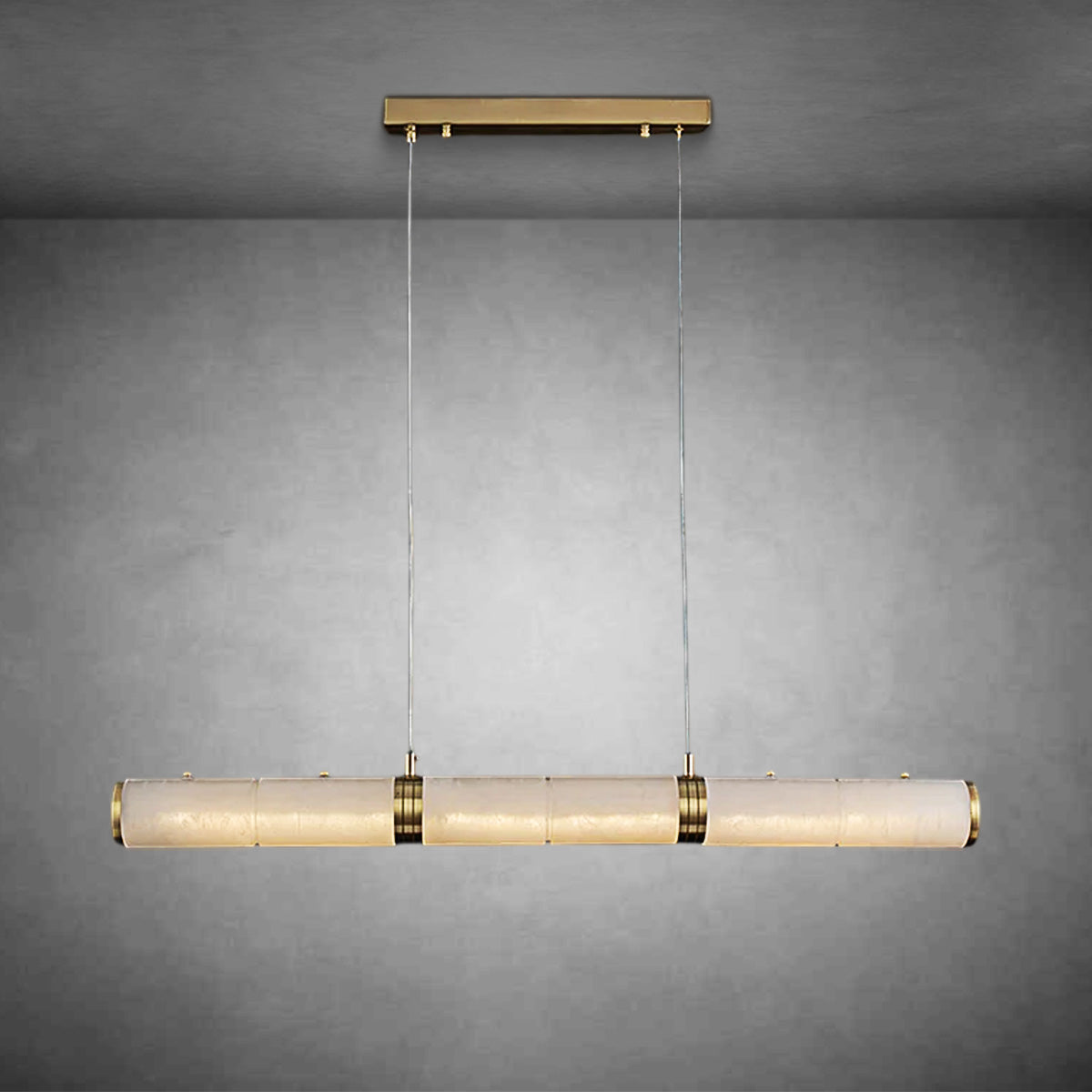
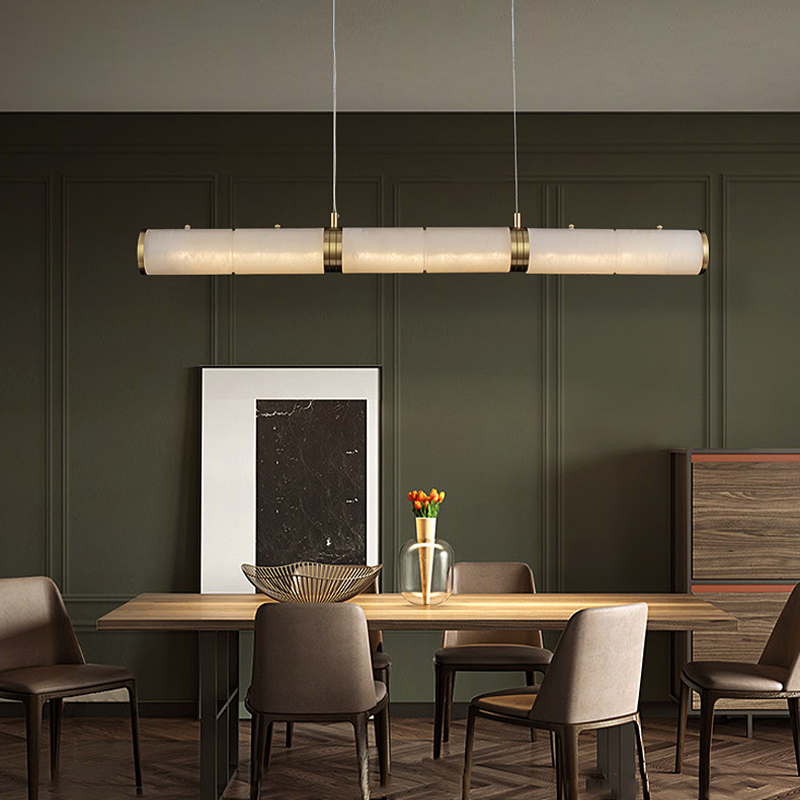
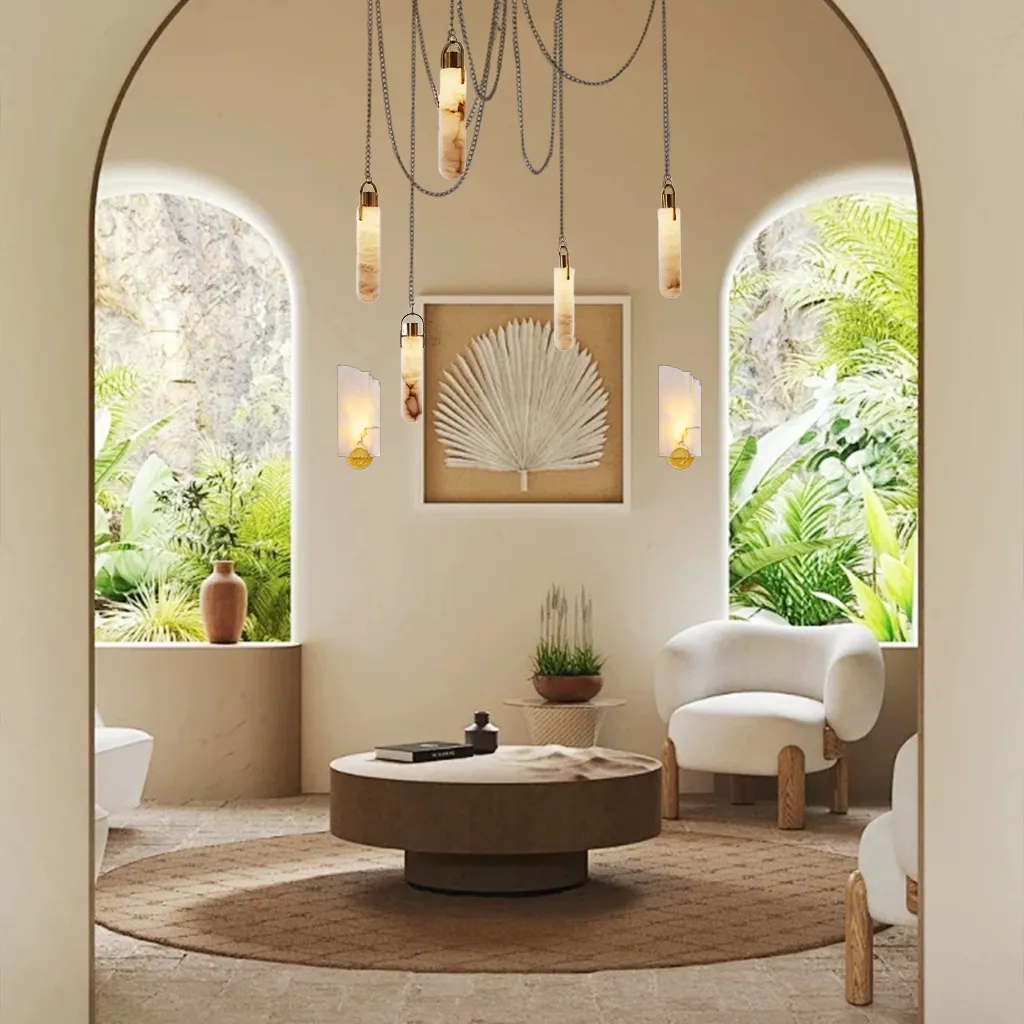
Add your room's length and width in feet—the total in inches is a good chandelier diameter. For hanging height, leave 30–36 inches between the tabletop and the bottom of the chandelier, adding 3 inches per foot of ceiling above 8 feet.
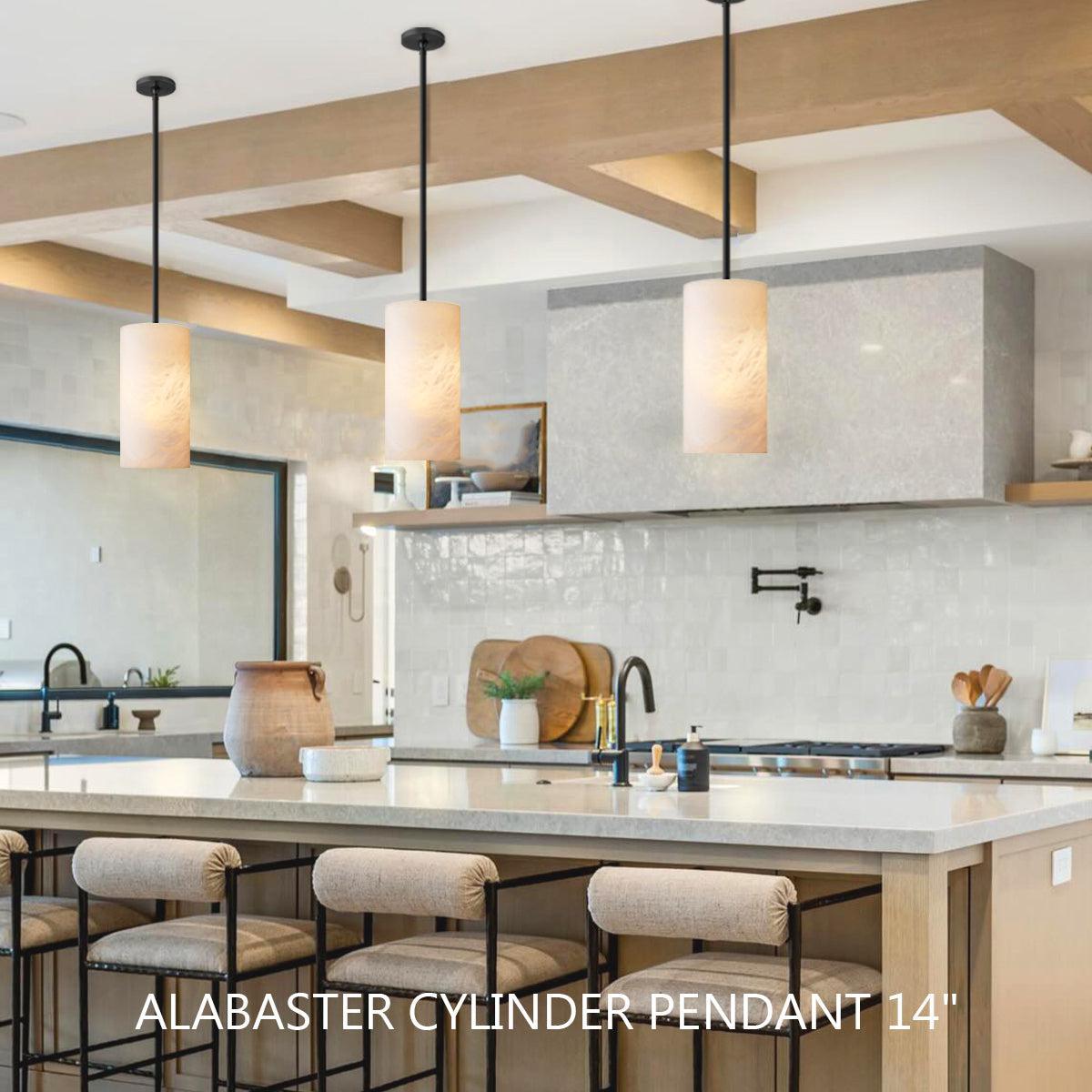
For most islands, hang two or three alabaster pendant lights, spaced evenly with about 30–32 inches between the countertop and the bottom of each pendant. A single large pendant suits islands under 4 feet; three fit islands 8 feet or longer.